
The green anole, native to the southern United States and the most widely kept of all Anolis species, has gained popularity since the 1950s.
While this type of lizard is quite small, they do have particular requirements that you need to follow to ensure they are happy.
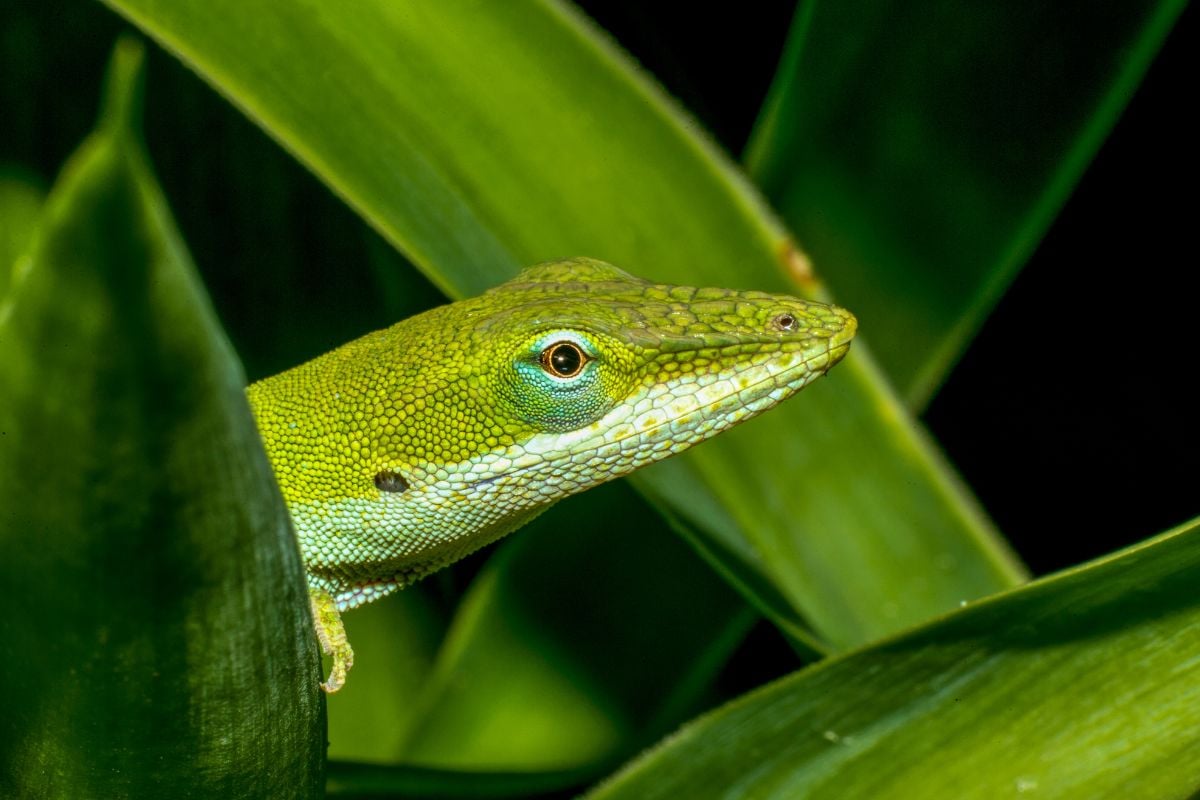
If your green anole isn’t cared for properly, then they will turn brown, which is an indicator that they are stressed. Thus, you need to ensure they have plenty of humidity and light to stay healthy and green.
We have put together this care sheet (see also “Veiled Chameleon Care Sheet”), so you can know how to look after your green anole properly.
What Is A Green Anole?
A female green anole rarely grows longer than 5 to 6 inches, but males can reach a length of 8 inches. Once they are 18 months old, hatchlings will be sexually mature, and adults will continue to grow throughout their lives.
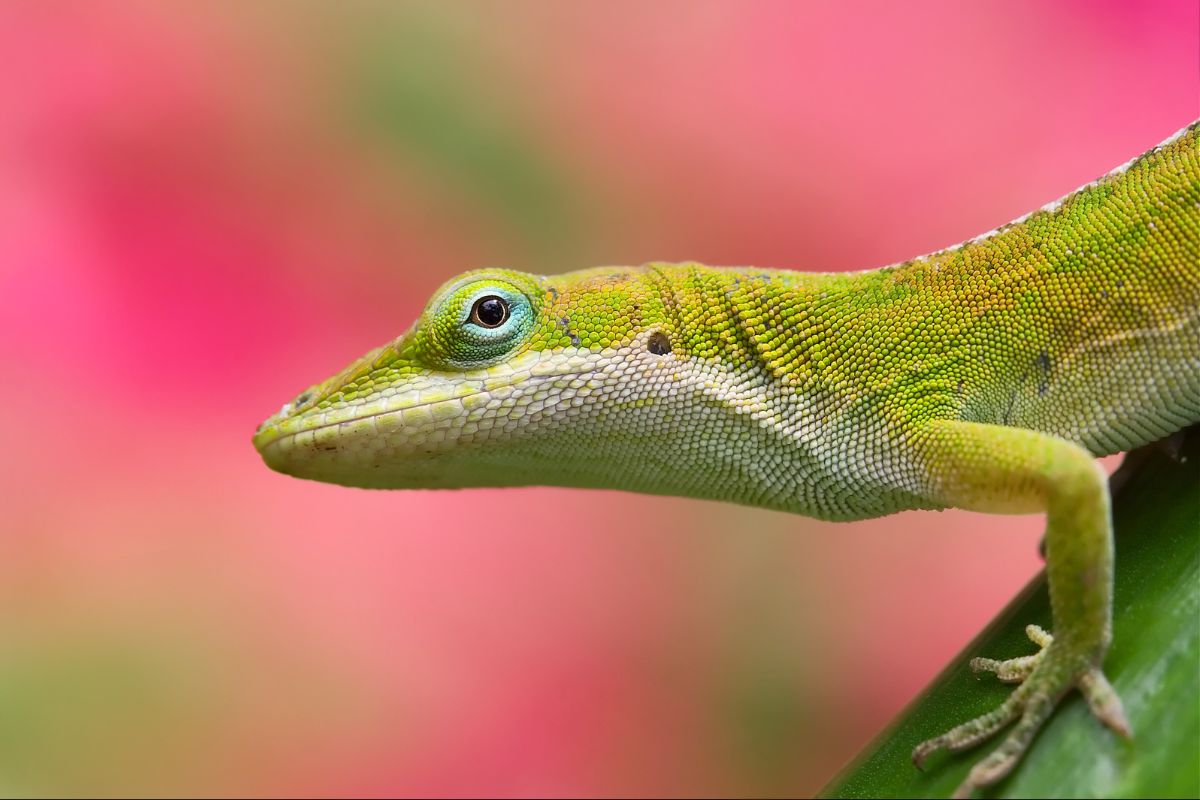
The green anole’s head is shaped like a spear, and its big eye sockets support its sharp vision.
With a pale lower jaw and underside, green anoles can appear either brown or green based on their mood and the time of day. The back of females and young green anoles is marked with a white stripe.
The green anole’s dewlap ranges in color from orange to pink.
The green anole is a nimble creature with a muscular build. Due to being lightweight, these skinny lizards can move through their foliage and vegetation easily.
Green Anole Enclosure Requirements
The forest—dwelling green anole requires taller enclosures, hence vertically oriented enclosures are preferred. It is advised to choose a terrarium with good ventilation because air flow is crucial.
A single green anole should be housed in an enclosure that is no smaller than 24′′L x 24′′W x 24′′H. Although, if possible the bigger the enclosure, the better.
It is ideal to select an enclosure which is front-opening and transparent on every side. This is for ease of access and to keep your lizard relaxed.
Vegetative cover that is vertically oriented is a must. This includes plastic plants or acrylic vines that stick to the walls of your tank.
As opposed to ground-level hides or caves, green anoles prefer to hide out in vegetation tangles that are hung in the air.
Green Anole Temperature And Lighting Needs
A green anole requires a basking UVA and UVB long tube light for 12 to 14 hours per day. In their tank, you must establish a temperature gradient.
Decide which side of the tank will be “warm” and which side will be “cool.”
The temperature in the green anole’s basking area (the warm side) should range from 85 to 90 degrees Fahrenheit. The tank’s cooler area should be between 70 and 75 degrees Fahrenheit.
Even though nighttime temperatures may be cooler, they shouldn’t fall below 65 °F.
Maintain heat levels by using an under-tank heater and the basking bulb. Heat rocks should never be used as they harm a lizard’s skin. For these lizards, temperature, and humidity are essential.
The optimal humidity range for the green anole is between 60 and 70%. Daily misting or a misting system is vital to keep the humidity levels as high as possible for your green anole.
Green Anole Substrate Options
Green anoles do well in substrates made of untreated bark or soil combined with decomposing leaf litter. Oily, sticky, or fragrant substrates like wood shavings or paper towels should be avoided.
Since the green anole is a subtropical species, it is not advised to use a substrate that is overly dry, such as any kind of sand.
Green Anole Diet
Small invertebrates including crickets, maggots, mealworms, roaches, and other insect food are all consumed by green anoles.
Grasshoppers and leaf-hoppers found in the wild are excellent additions to your anole’s diet.
However, be sure that any natural insects you give your pet are devoid of herbicides, pesticides, and other potentially harmful agricultural chemicals.
Stay away from super-worms and king-worms since they have sharp, powerful jaws that could hurt your anole.
Green Anole Drinking Habits
Wild green anoles generally drink early morning dew or water off leaves after a downpour. All green anoles will drink water that has been misted onto foliage and surfaces inside their tank.
Green anoles will get stuck in steep-walled or deep water dishes. Additionally, they will die if they get trapped in deep water.
Thus, if you decide to supply a water dish, make sure it is shallow. You need to provide your green anoles a means of escape, such as a vine or stick in the water dish.
Green Anole Temperament And Handling
Green anoles ought to be handled gently, and they typically prefer perching on their carers’ hands or shoulders.
They do withstand gentle contact with their owners, but it’s advisable to limit handling as they are delicate lizards with very breakable tails.
Let your green anole have a couple of weeks to adjust to their new environment before you attempt to handle them.
Anybody touching green anoles must wash their hands afterward with antibacterial soap. While, children should always be supervised when handling green anole.
Final Thoughts
Green anoles are a great lizard to own, but you need to ensure that you keep their enclosure at the right temperatures and humidity. It is very clear when your green anole isn’t happy, as they will turn brown.
However, as long as you follow all the tips we have mentioned above, this shouldn’t happen.
While this type of lizard has particular housing needs, they are easy to care for. However, they aren’t the perfect pet for handling. You should limit how often you handle them, due to them being delicate creatures.
We hope this care sheet has helped you to understand how to care for a green anole (see also “Frilled Dragon Care Sheet“).

This is what inspired me to start The-Lizard-Lounge.com. I wanted to create a space that offers information about the care of various reptiles and lizards, to help those passionate about these animals learn how to care for them.
Join me, and learn all about these fascinating and fantastic creatures!
- Can Leopard Geckos Eat Silkworms? - March 11, 2024
- Do Leopard Geckos Climb? - March 4, 2024
- Do Leopard Geckos Bask? The Answer Will Surprise You - February 21, 2024