
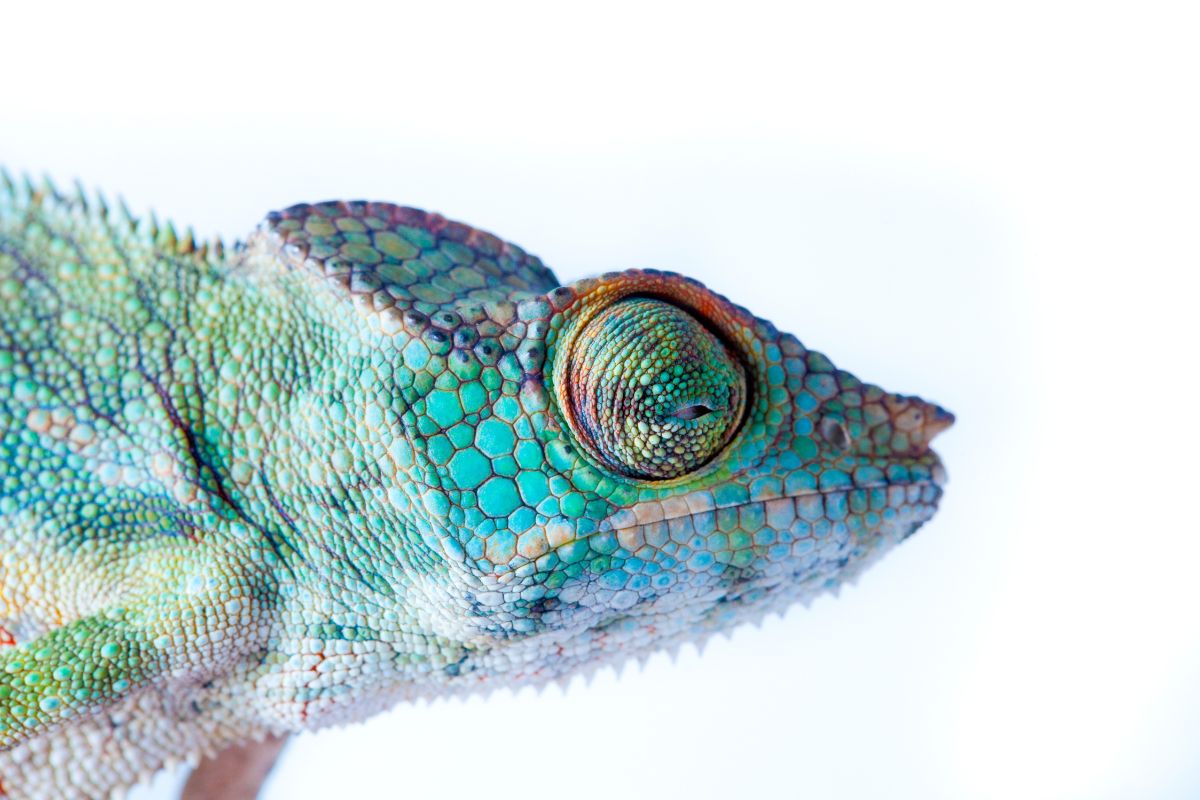
Panther chameleons are a species of chameleon, native to Madagascar, known for their vibrant colors. They have the ability to change color, which they use to both communicate with other chameleons and regulate their body temperature.
And like other species of chameleon, they have long, sticky tongues that they use to catch insects and other small prey!
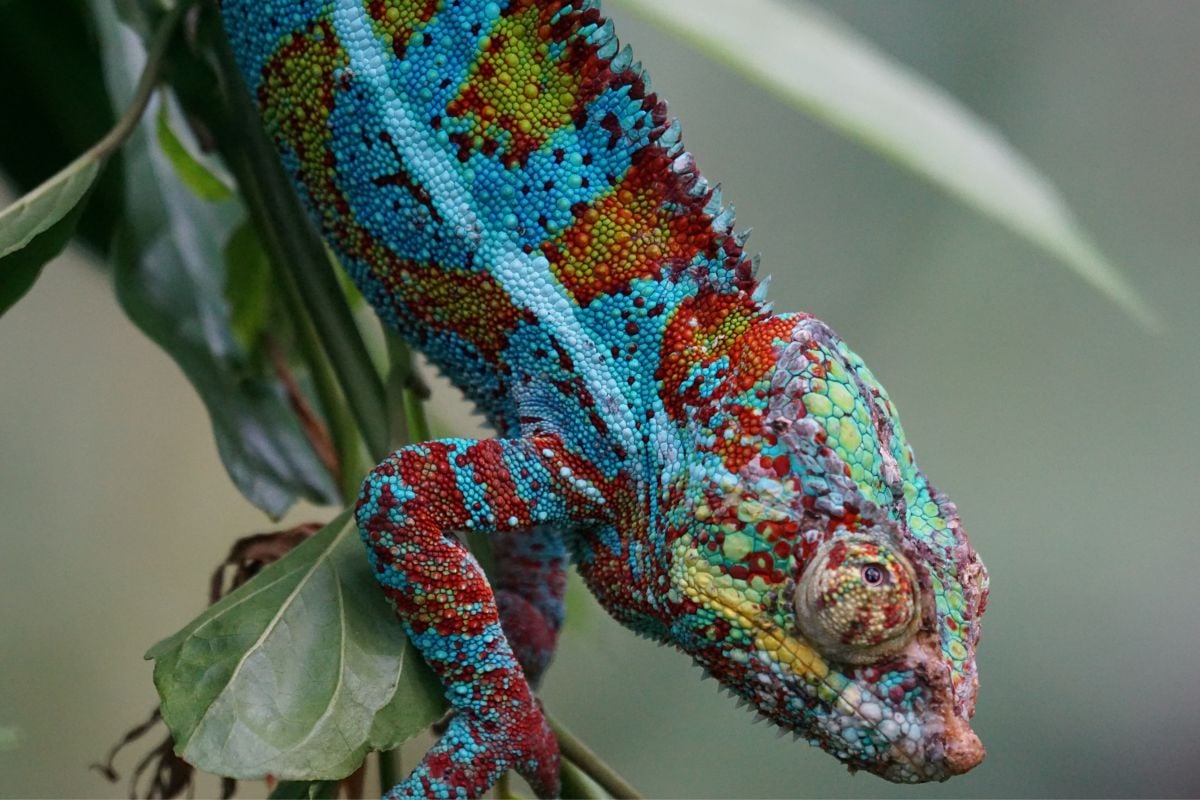
Panther chameleons also make great pets. Alongside their unique appearance, they have fascinating behaviors and are easy to look after due to their docile nature.
Despite that, panther chameleons need to be provided with the necessary care and attention they need to thrive. They typically don’t like to be handled either, so there definitely are a few things to weigh up before choosing one as a pet.
But to help you care for your panther chameleon or decide whether a panther chameleon is the right pet for you, this panther chameleon care sheet will tell you everything you need to know.
Tank Size
Panther chameleons require a spacious enclosure that allows them to climb and move around freely.
The recommended minimum tank size for an adult panther chameleon is 18 inches by 18 inches, and at least 36 inches tall, although larger is always better.
Generally, male panther chameleons require larger enclosures than females, which can be kept in tanks that are 16 inches by 16 inches and 30 inches tall.
Panther chameleons also like to climb, so it’s important to provide ample branches, vines, and foliage for climbing.
By making sure that their enclosure is spacious and well-equipped, this will ensure that your panther chameleon remains healthy and happy!
Substrate
As mentioned above, panther chameleons love to climb – so they won’t spend that much time on the floor space of your tank. In fact, some chameleon owners keep the floor of their tank enclosures bare to reduce the amount of cleaning!
So even newspapers and paper towels are enough to line the floor of your panther chameleon tank. Coconut coir and reptile carpet can also be used as they’re both easy to clean.
In general, substrate for panther chameleon tanks is there to absorb moisture and improve the overall environment for the panther chameleon.
Hides
If you read the above, then you’re probably wondering where panther chameleons hide and rest if they don’t spend much time on the floor.
Unlike other species of lizards, the branches and foliage you provide in their tank will also be where your panther chameleon will rest and recharge!
So it’s important to decorate the enclosure with lots of branches, vines, and foliage.
As long as there’s an assortment of foliage that isn’t too crowded, complete with a few places that are sheltered but still in view (so you can monitor them), your panther chameleon will be happy and comfortable staying in their enclosure.
Temperature And Lighting
Like many other lizards, panther chameleons are ectotherms. This means that they need varying temperatures throughout their enclosure.
This includes a basking area, as well as a generally cool temperature for the rest of the tank.
The basking area should be around 85–90°F (29–32°C) and the rest of the tank should be kept between 75–85°F (24–29°C).
Your panther chameleon will also need a semi-intense UVB light to help them get the vitamin D they need to stay healthy.
Humidity And Water
Panther chameleons require a humidity level that’s generally between 60% and 80%.
That might sound high (and it is, compared to other lizards) but you might be glad to know that the live plants and foliage you put in your panther chameleon tank will help the humidity of the enclosure.
The humidity can be monitored with a hydrometer.
Panther chameleons do not typically drink water, so make sure to monitor their hydration levels (sunken eyes are a sign of dehydration) and mist both your panther chameleon and the enclosure regularly – around two to three times per day.
Diet
Panther chameleons are insectivores, so their diet mainly consists of insects. These include crickets, grasshoppers, roaches, mealworms, superworms, waxworms, silkworms, hornworms, and butterworms.
So panther chameleons have a varied diet – but also require a varied diet.
Make sure to provide a good variety of these insects, as well as ensure that the insects are gut-loaded and dusted with vitamin powders, especially calcium.
This guarantees your panther chameleon receives the nutrients it needs.
Handling
Panther chameleons can become accustomed to human presence and handling, but they are generally not as interactive as other reptiles.
They are docile, so they are best appreciated from a distance and should be handled infrequently to minimize stress and grumpiness.
If you do plan on handling your panther chameleon, approach it calmly from the bottom to avoid startling it. Try to coax it onto a stick before letting it naturally move onto your arm or hand.
A good tip is to encourage the panther chameleon with food if you want to handle it.
Breeding
Breeding panther chameleons can be an interesting and rewarding experience – as long as you are prepared!
Female panther chameleons can produce up to 30 eggs at a time, so you’ll need extra space to incubate them, as well as the resources and time to raise the babies once they hatch.
Once you introduce a pair of male and female panther chameleons, the male will usually begin the courting process by displaying his colors and bobbing his head. If the female is receptive, they will mate.
It’s important to monitor the process, as mating can be stressful for the female since males can get aggressive.
Make sure she has a suitable nesting site to lay her eggs and be ready to incubate them in a separate enclosure for about six to eight months!
Conclusion
In summary, panther chameleons are great pets as long as you’re willing to invest the time and resources to give them the proper care and attention they require.
If you read everything in this guide, then you should know by now whether a panther chameleon is the right pet for you!

This is what inspired me to start The-Lizard-Lounge.com. I wanted to create a space that offers information about the care of various reptiles and lizards, to help those passionate about these animals learn how to care for them.
Join me, and learn all about these fascinating and fantastic creatures!
- Can Leopard Geckos Eat Silkworms? - March 11, 2024
- Do Leopard Geckos Climb? - March 4, 2024
- Do Leopard Geckos Bask? The Answer Will Surprise You - February 21, 2024